
REVIEW · WORKSHOPS
4 Hour Art and Craft Interactive Workshop
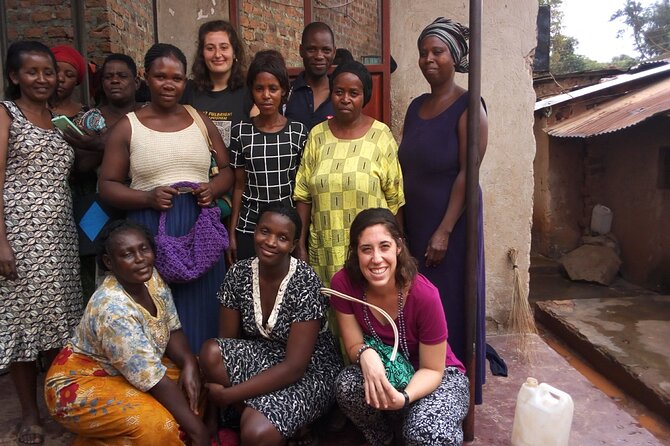
Make art, then take it home. This four-hour workshop in Kampala combines hands-on craft lessons with a look at Ugandan family life, local art, and practical community work. I like the chance to create several finished pieces from waste materials, and I like that the fee supports UCASDR, which provides free practical skills to vulnerable children and local communities. The main consideration is simple: this is a focused art session, not a general Kampala sightseeing tour.
You meet Tusiime Mathias at the UCASDR Arts Centre in Wamala, Katooke, at 10:00 a.m. The small group, capped at 10 people, should make it easier to ask questions and receive help with each stage. I also like that the activity takes place in Mathias’s home, where you can see a working Ugandan household setting, though some people may prefer a formal studio or a shorter class.
In This Review
- Key points to know before you book
- Starting at 10 a.m. in Wamala, Katooke
- Entering a Ugandan home and gallery
- Building the canvas from discarded materials
- Painting your own finished piece
- Clay sculpture and woodcut printmaking
- Why the small group improves the lesson
- Is $35 a fair price?
- Who will enjoy this Kampala activity most?
- Practical details that affect your day
- Should you book the art workshop?
- FAQ
- Where does the workshop start?
- What time does the activity begin?
- How long does the art and craft workshop last?
- Where does the workshop finish?
- How much does the workshop cost?
- How many people can join the activity?
- What art techniques are included?
- Can I take home the artwork I make?
- Is transportation provided?
- What happens if bad weather cancels the workshop?
- What is the cancellation policy?
Key points to know before you book
- Make a canvas from waste materials: You learn how discarded materials can become the base for a finished artwork.
- Try several art forms: The workshop can include frame cutting, painting, clay sculpture, and woodcut printmaking.
- Take home every piece you make: Your work is not just for practice. You keep the artworks produced during the session.
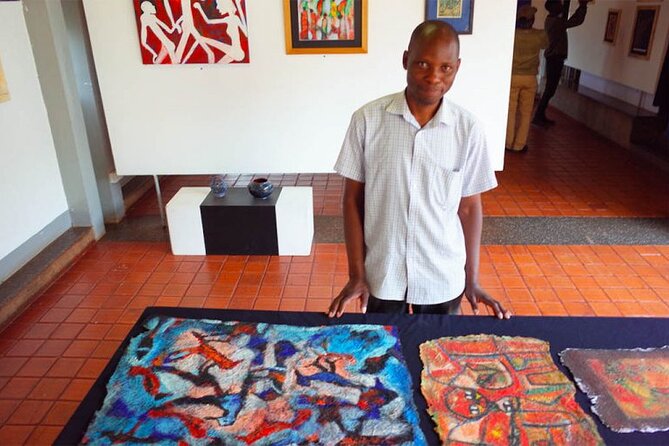
- See a local art collection: Time is set aside to view the collections in the art gallery and meet artists.
- Support community skills training: Money from the activity helps UCASDR provide practical skills and development support.
- Expect a small, four-hour session: The start time is 10:00 a.m., the group limit is 10, and the activity returns to the same meeting point.
Starting at 10 a.m. in Wamala, Katooke
The day begins at the UCASDR Arts Centre in Wamala, Katooke, Kampala. You should plan around the stated 10:00 a.m. start, since the four-hour program has several separate stages and is not designed as a drop-in craft stop.
The meeting point is also the end point. That is useful if you are arranging your own transport, since you do not need to find a second return location. The activity is near public transportation, but no specific route, fare, or pickup service is provided, so you will need to handle the journey to the arts centre yourself.
A mobile ticket is accepted, and confirmation is sent when you book. The group limit of 10 is a practical advantage here. Craft work gets awkward when everyone is reaching for the same materials, while a small class gives you a better chance to watch the demonstrations and ask Mathias for help.
Other trips worth a look in Uganda:
- 3 Hours Guided Cycling Tour Across Lake Victoria
★ 5.0 · 151 reviews - Kampala’s Best Experience walking tour
★ 5.0 · 137 reviews - 3 Days gorilla trekking Safari tour in Uganda
★ 5.0 · 121 reviews
Entering a Ugandan home and gallery
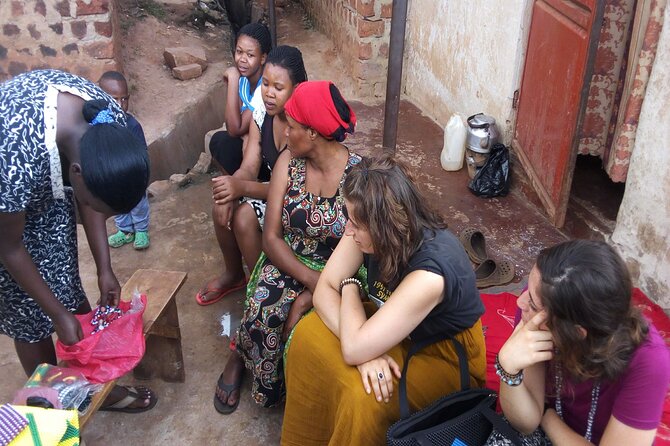
The setting is part of the experience. The activity takes place in Mathias’s home, so you see more than a lesson in making objects. You also get a glimpse of a Ugandan family setting, including local culture and traditions as presented through the home and the art activity.
That home setting may be the strongest reason to choose this workshop instead of a standard art class. You are not simply sitting in a detached classroom. You are meeting artists and seeing the surroundings where the activity is hosted. At the same time, you should come with an open mind. A home-based workshop may feel more informal than a purpose-built art school, and the information does not promise a formal tour of every part of the household.
You also have a chance to see the collections in the art gallery. The details of the collection are not specified, so you should not book expecting a particular artist, period, or style. Think of the gallery visit as useful context for the making session: you see local work, then use your hands to produce something yourself.
Building the canvas from discarded materials
The first practical lesson centers on making a handmade canvas from waste materials. This is more interesting than simply receiving a prepared board or blank canvas. You learn how basic materials can be reused and turned into a surface for art.
The process includes cutting the frames and preparing the canvas before the final artwork begins. That sequence matters. You see the structure underneath the painting, not only the attractive finished layer. If you have never made a canvas, this is the part that gives the workshop its strongest practical value.
The class is designed as a guided process, so you are not expected to arrive with advanced art skills. Most people can participate, and the activity is built around learning by doing. You should still expect to work carefully with the materials and follow instructions during frame preparation.
The use of waste materials also connects the craft lesson to the wider purpose of the organization. UCASDR provides free practical skills and development support for vulnerable children and local communities. Your fee helps that work, while you receive a usable lesson and a physical result to take away.
Painting your own finished piece
Once the canvas is prepared, you move into painting and the creation of the final artwork. This is where the session becomes personal. You are not only watching Mathias demonstrate a technique. You use paint and other materials to make your own piece.
The exact subject, color choices, and design are not set out in the available details, so you should not expect a fixed image that everyone copies. The workshop appears to leave room for your own work within the methods being taught. That is helpful if you like creative freedom, but less suitable if you want a tightly scripted class with a guaranteed result.
A direct account of the session describes Mathias showing how to make a canvas, then using paints and different materials to help create a personal piece. The same account highlights how welcoming and interesting the experience felt. That points to an instructor-led class with plenty of encouragement, rather than a silent work period where you are left to figure everything out alone.
You take your finished painting with you. This makes the activity easy to remember after you leave Kampala, and it gives the four-hour price more weight than a short demonstration with nothing to show for it.
A completely different kind of day:
- Lake Victoria Island Cycling Tour from Kampala
★ 5.0 · 120 reviews - Kampala Walking City Tours (Women Guided)
★ 5.0 · 115 reviews - Kampala Walking Tour (3 Hours) with Optional Gaddafi Mosque Visit
★ 5.0 · 112 reviews - 1 Day Sipi falls hike
★ 5.0 · 100 reviews
Clay sculpture and woodcut printmaking
Painting is only one part of the workshop. You can also make sculptures from clay and try woodcut, or printmaking. These techniques use different parts of your attention: clay is shaped in three dimensions, while woodcut focuses on producing an image through a carved or prepared surface.
The variety keeps the session from becoming repetitive. If painting is not your favorite art form, the clay or printmaking section may be the part you enjoy most. It also gives you a better feel for the range of materials used by local artists.
The description says all work made during the activity is yours to take. That includes the pieces created during these sections, not only the canvas. You should keep in mind that handmade objects can be fragile, especially clay work, so packing and carrying your pieces after the workshop will require care. No special packaging or shipping service is listed.
The activity covers a lot in four hours: frame cutting, canvas preparation, painting, clay sculpture, and woodcut printing. That breadth is appealing, but it also means you may not spend a long time mastering any single method. If you want a detailed multi-day printmaking course, this is not that. If you want a lively introduction to several techniques, the format makes sense.
Why the small group improves the lesson
With a maximum of 10 people, the workshop has a more personal scale than a large commercial class. You can watch the process closely, compare your work with other participants, and ask for help as you go.
The benefit matters most during frame cutting and printmaking, where a quick demonstration may not be enough for a first attempt. Mathias is the named provider and guide, and the available experience details specifically identify him as the person leading the session.
The class is open to most people, and service animals are allowed. No special fitness requirement is given. Still, the work involves sitting, handling materials, painting, and making objects by hand, so you should be comfortable taking part in a practical art class for about four hours.
The small group also fits the home setting. Ten people is still a real group, but it is less likely to overwhelm a private workshop than a much larger booking. If you prefer a busy social activity, you may find the size a little quiet. If you want direct contact with the instructor, it is a plus.
Is $35 a fair price?
At $35 per person, the value comes from the number of elements packed into the session. You receive roughly four hours of instruction, access to the art and craft materials used during the activity, a gallery visit, contact with local artists, and the artworks you produce.
The price also contributes to UCASDR’s community work. The organization uses income from the activity to support free practical skills and development programs for vulnerable children and local communities. That gives your spending a purpose beyond the class itself.
I would judge the price favorably if you want an activity rather than another passive tour. A museum ticket may give you more objects to see, but it will not give you a canvas, sculpture, and printmaking experience to carry home. On the other hand, someone who only wants a quick craft demonstration may find four hours longer than necessary.
The strongest value comes if you take part fully. You are paying for instruction and materials, not just admission to a gallery. Set aside the whole morning and early afternoon, and treat the process as the main event.
Who will enjoy this Kampala activity most?
I would recommend this workshop to people who want direct contact with local creative work. It suits solo visitors, couples, families, and small groups who would rather make something than spend another morning looking at sights from a vehicle.
It is also a good choice if you care about community benefit. The connection to UCASDR means your payment supports practical training for local communities and vulnerable children. That purpose is a meaningful part of the decision, not a footnote.
Parents may appreciate the hands-on format, though the available information does not give a minimum age or confirm that every part is designed for children. Ask before booking if age suitability matters for your group.
Art beginners should feel comfortable choosing it. The class covers basic construction and several creative methods, and the small group allows room for guidance. Experienced artists may enjoy the chance to work with different materials, but should not expect an advanced specialist course.
You should be less interested if your priority is a fixed sightseeing schedule, a polished commercial studio, or a short activity lasting under two hours. The home setting, community purpose, and broad range of techniques are the point.
Practical details that affect your day
The activity starts at 10:00 a.m. and lasts about four hours, ending back at the UCASDR Arts Centre. Since the exact transport arrangements are not provided, confirm how you will reach Wamala, Katooke before the day begins.
The experience can be booked with a mobile ticket, and confirmation arrives at booking. Service animals are allowed, and the activity is near public transportation. Most people can participate, although the available details do not describe specific facilities for mobility needs.
Weather can affect the schedule. If poor weather causes cancellation, you are offered another date or a full refund. For your own plans, avoid placing an important afternoon connection too close to the end of the workshop, since craft work can run at the stated approximate duration.
Cancellation is free up to 24 hours before the 10:00 a.m. start. A cancellation made less than 24 hours ahead is not refunded, and changes inside that period are not accepted. The cut-off uses local time.
Should you book the art workshop?
I would book this if you want a small, practical Kampala experience with a clear local connection. The handmade canvas, clay sculpture, woodcut printmaking, and take-home artworks give you plenty to do, while the gallery and home setting add cultural context.
The best reason to choose it is the combination of personal instruction and community support. Mathias leads a welcoming session, and the money helps UCASDR provide free practical skills and development support.
Skip it if you want a formal gallery tour, a tightly timed sightseeing stop, or an advanced class in one single technique. For everyone else, $35 is a reasonable price for four hours of making, learning, and leaving with art that you produced yourself.
FAQ
Where does the workshop start?
It starts at the UCASDR Arts Centre in Wamala, Katooke, Kampala, Uganda.
What time does the activity begin?
The workshop starts at 10:00 a.m.
How long does the art and craft workshop last?
It lasts approximately four hours.
Where does the workshop finish?
The activity ends back at the meeting point, the UCASDR Arts Centre.
How much does the workshop cost?
The price is $35 per person.
How many people can join the activity?
The maximum group size is 10 participants.
What art techniques are included?
The workshop includes making a handmade canvas from waste materials, cutting frames, painting, clay sculpture, and woodcut printmaking.
Can I take home the artwork I make?
Yes. The artwork made during the activity is yours to take with you.
Is transportation provided?
No transportation service is specified. The meeting point is near public transportation.
What happens if bad weather cancels the workshop?
You are offered a different date or a full refund if the activity is canceled because of poor weather.
What is the cancellation policy?
You can cancel at least 24 hours before the start time for a full refund. Cancellations and changes made less than 24 hours before the activity are not accepted, and the amount paid is not refunded.
Just added in Uganda
- Wanale hill hike★ 5.0 · 1 review
- Uganda Equator Tour From Kampala To Kayabwe★ 5.0 · 4 reviews
- Uganda: 4-Day Murchison Falls National Park Safari★ 5.0 · 1 review
- Uganda: 3-Day Gorilla Experience from Entebbe★ 5.0 · 2 reviews
- Hot Springs Exploration and Hike Craters★ 5.0 · 6 reviews
- Uganda: 1-Day Murchison Falls Park Safari with Boat cruise★ 5.0 · 3 reviews
- Coffee Tour Experience★ 5.0 · 5 reviews
- 4 Days Uganda Gorilla and Wildlife Tour★ 5.0 · 2 reviews
Workshops, compared.
Cooking Class for Typical Ugandan Food in Kampala
Read our review →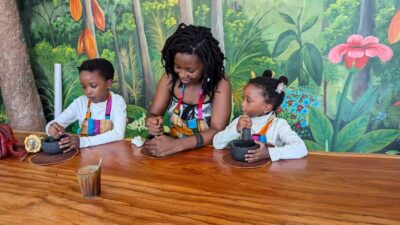
Private Ugandan Food Cooking Class and Culture Experience
Read our review →

Browse the lists this tour appears in