REVIEW · CITY TOURS
Kampala City Tour – Half Day
Kampala reveals itself one hill at a time. This private city tour gives you a useful first look at Uganda’s capital, combining central landmarks with Buganda royal sites, markets, places of worship, and a guide who can explain how the pieces fit together. I especially like the private format, which lets you ask questions and set a comfortable pace, and the chance to see Kampala from the Gaddafi National Mosque minaret.
The tour also includes hotel pickup, an air-conditioned four-wheel-drive minibus, water, admission fees, a route map, and souvenir photos. Guide Matthew receives particular praise for his patience, energy, and ability to make Ugandan history understandable. The main drawback is the ambitious schedule: six or seven hours is a long stretch for a tour called half-day, and the Uganda Museum is currently under renovation.
The itinerary covers a lot of ground, from the city center to the northern suburbs. You should expect traffic, short stops, and some walking, especially at the mosque, palace, tombs, and Baha’i Temple. If the museum remains closed when you visit, the tour will temporarily end at the Baha’i Temple before your return to the hotel.
In This Review
- Key points to know before booking
- Why this Kampala tour works well as a first introduction
- Starting downtown among monuments and ministries
- Meeting Buganda at the Kabaka’s Palace
- Climbing the Gaddafi National Mosque minaret
- Understanding the Kasubi Tombs
- Passing through Makerere University
- Finding quiet at the Baha’i Temple
- The Uganda Museum renovation and the changing final stop
- What the $215 price really buys you
- Timing, comfort, and fitness
- Who should book this experience
- Should you book the Kampala City Tour?
- FAQ
- How long does the Kampala City Tour last?
- What time does the tour start?
- Is hotel pickup included?
- Is the Uganda Museum open during the tour?
- Is the Baha’i Temple open every day?
- Are entrance fees included?
- Can I cancel the tour for a refund?
Key points to know before booking
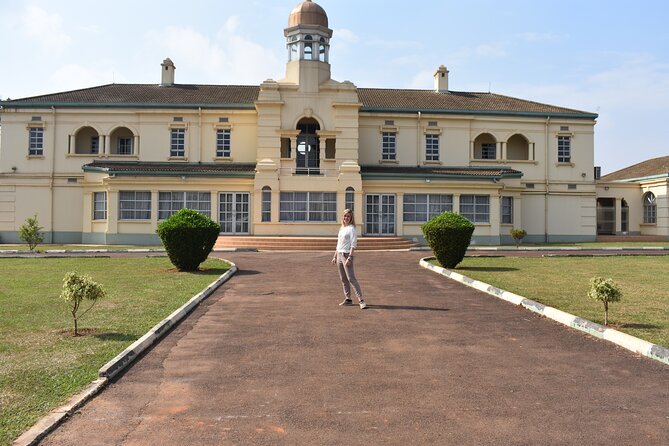
- The tour is private: Only your group participates, so you can ask for more explanation at sites that interest you.
- It lasts about six to seven hours: Despite the half-day title, the route is closer to a long half-day or full day.
- The Gaddafi Mosque gives you a citywide view: Climb the minaret for a 360-degree look across Kampala’s famous seven hills.
- Buganda history gets serious attention: The Kabaka’s Palace, Royal Mile, Bulange, clan symbols, and Kasubi Tombs form the cultural heart of the route.
- The Uganda Museum is under renovation: It is listed as a stop but is expected to reopen in late 2025, so confirm its status before booking.
- Guide Matthew earns strong praise: His friendly, animated explanations are a major reason this tour works well for first-time visitors.
Why this Kampala tour works well as a first introduction
Kampala is not a city you understand by ticking off one famous monument. Its story is spread across government buildings, markets, royal compounds, religious centers, universities, and old neighborhoods. This route gives you a broad introduction without asking you to organize several separate rides.
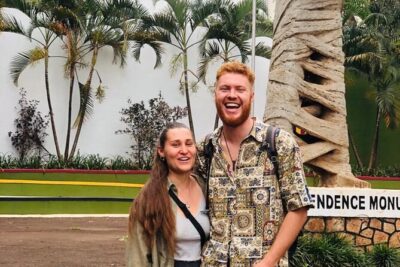
I like the way the tour links modern Uganda with the Buganda kingdom. You begin around Kampala’s central business district, where the Independence Monument, Parliamentary Building, Bank of Uganda, Kampala Capital City Authority headquarters, and Uganda National Cultural Centre help explain the country’s political and civic life. Then you move toward places tied to the Kabaka, the traditional king of Buganda.
That shift matters. Kampala is Uganda’s national capital, but it is also the historic center of Buganda, one of the country’s traditional kingdoms. A guide can explain that overlap far better than a quick visit on your own. Matthew, one of the named guides, is described as patient, friendly, and full of energy, which is useful when the subject matter gets dense.
The tour is arranged as a private activity, not a shared group outing. That means you are not waiting for strangers at every stop, and you can ask questions about Ugandan politics, faith, architecture, or royal tradition as they come up. The vehicle has air conditioning and Wi-Fi, with a designated window seat, a practical comfort in Kampala’s traffic.
More city tours in Kampala:
- Kampala Walking City Tours (Women Guided)
★ 5.0 · 115 reviews - Kampala: City Guided walking sightseeing Tour
★ 4.7 · 52 reviews - Half day Kampala City Motor Bike Tours
★ 5.0 · 29 reviews
Starting downtown among monuments and ministries
The morning begins at 8:30 a.m., either with hotel pickup within the Kampala area or at the Gazelle Safari Company meeting point on Gabunga Road 2. The first section is a driving tour through central Kampala.
You pass the Independence Monument, Mutesa II Monument, World War II Monument, Parliamentary Building, Bank of Uganda, Uganda National Cultural Centre, and Kampala Capital City Authority headquarters. Some of these are brief drive-by views rather than long visits, so do not expect a full architectural tour of each building.
Still, this opening circuit is useful. It gives you a quick map of the city’s public center and introduces the people and institutions that shaped Uganda after independence. The Mutesa II Monument is especially relevant because Sir Edward Mutesa II was both the first president of independent Uganda and the Kabaka of Buganda.
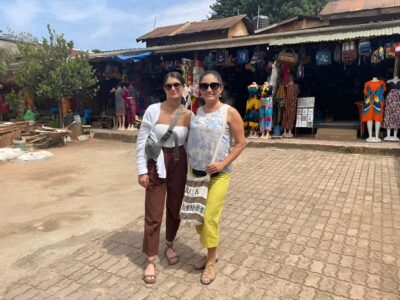
The route then reaches Nakasero Market. Founded in 1895, the market first operated at Lubiri before moving to its present central location in 1905. You can browse stalls selling spices, textiles, fresh produce, and other everyday goods.
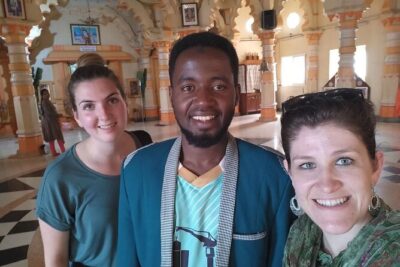
This is one of the better places to see ordinary city life rather than only official monuments. You may also see Hindu religious sites, including Shree Swaminarayan Mandir. If you want to buy something, ask the guide about appropriate prices and customs before making a purchase. The schedule is fairly full, so the market visit may be more about looking and photographing than lingering over a long shopping session.
Meeting Buganda at the Kabaka’s Palace
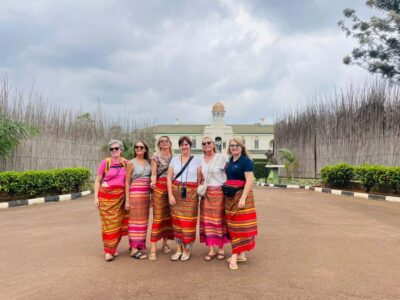
The visit to the Kabaka’s Palace gives the tour its strongest historical focus. The palace is connected to the Buganda Kingdom, and the grounds include reminders of both royal life and Uganda’s troubled modern past.
You see Iddi Amin’s former armory, including a historical machine gun, along with palace photographs and displays about Buganda. The material is not just decorative. It helps show how royal tradition, colonial rule, and later political conflict affected the kingdom.
The wider Buganda route includes a drive past Kabaka’s Lake and the Nantawetwa monument. Nantawetwa was built for the king and is opened when he is driven between the palace and the Buganda Parliament. You also pass along the Royal Mile toward Bulange, the Buganda Parliament, as well as the Kabaka’s Monument, Zakaria Kisingiri House, and Buganda clan symbols.
You have about an hour here, with admission included. That is enough for a useful introduction, but not an exhaustive study of every building. I would pay close attention to the guide’s explanations, since the meaning of the palace and clan symbols can be easy to miss if you only look at the structures.
The palace is also a good example of why a private guide adds value. A silent walk through the grounds would show you walls and objects. A guide can explain why the Kabaka matters, how the Buganda kingdom fits into Uganda today, and why particular sites on the Royal Mile are important.
Climbing the Gaddafi National Mosque minaret
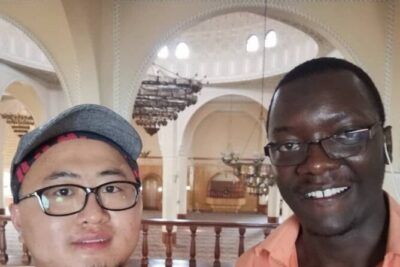
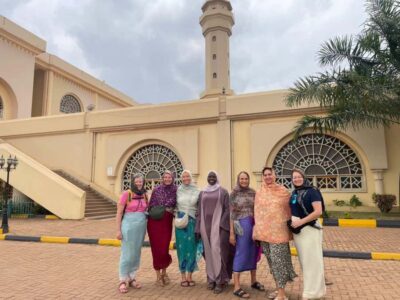
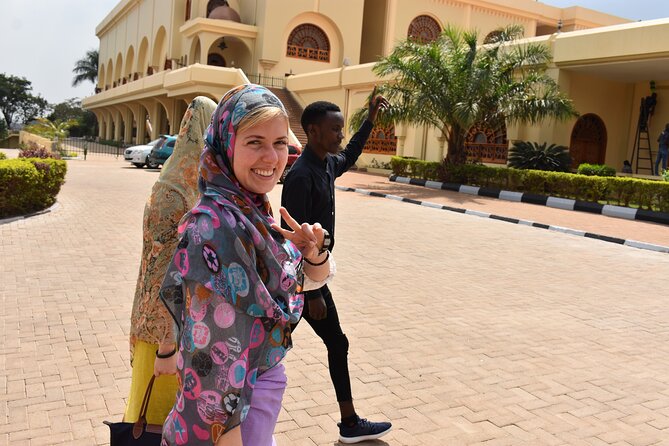
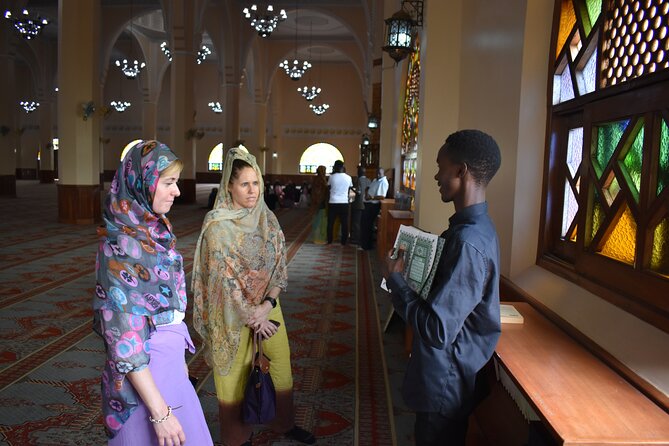
The Gaddafi National Mosque is one of the tour’s most memorable stops. It was given to Uganda by the late Colonel Muammar Gaddafi and sits in the Old Kampala area, where the city’s older layers come into view.
The main reason to visit is the minaret. You climb the tower for a 360-degree view across Kampala’s seven hills. From above, you can also see Fort Lugard, associated with Captain Frederick Lugard, and Old Kampala Senior Secondary School.
The view is valuable because Kampala can feel confusing from street level. Hills, valleys, roads, markets, and dense neighborhoods do not always line up in an obvious way. From the tower, the city’s form becomes easier to understand.
Allow roughly an hour for this stop. The climb requires a moderate level of physical fitness, so it may not suit anyone who has trouble with stairs or extended walking. You should also expect the visit to take place within an active religious setting. Dress and behavior should be respectful, and follow any instructions given at the mosque.
This stop combines architecture, faith, and geography in one place. It is not simply a photo stop, although the view is certainly the highlight.
A few more options to weigh up in Kampala
- 3 Hours Guided Cycling Tour Across Lake Victoria
★ 5.0 · 151 reviews - Kampala’s Best Experience walking tour
★ 5.0 · 137 reviews - 3 Days gorilla trekking Safari tour in Uganda
★ 5.0 · 121 reviews - Lake Victoria Island Cycling Tour from Kampala
★ 5.0 · 120 reviews
Understanding the Kasubi Tombs
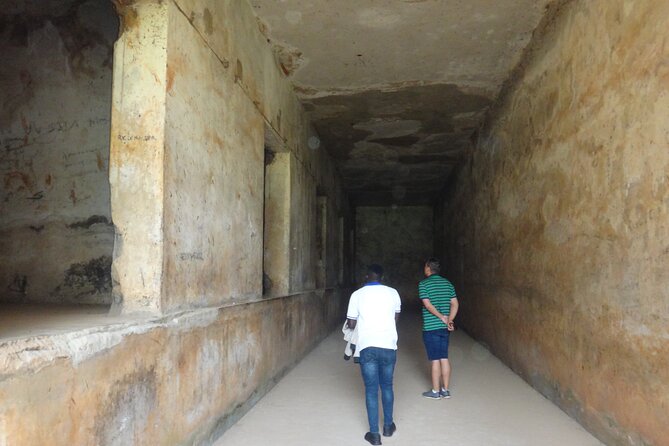
The Kasubi Tombs are a UNESCO World Heritage Site and one of the most important cultural stops in Kampala. The site is a burial ground for four former kings of Buganda, known as Kabakas.
The tombs remain a spiritual place for the Baganda. Traditional practices and ceremonies connected with Buganda culture continue here, and the site also serves as a cultural center for the royal family. That gives it a different mood from the palace. The palace focuses more on royal residence and political history, while Kasubi centers on remembrance, ritual, and continuity.
The planned visit lasts about an hour, with admission included. You should approach it as a place of respect, not simply an attraction. Listen carefully to instructions about photography, movement, and behavior.
Kasubi also adds depth to the earlier palace visit. Seeing both sites helps you understand that Buganda’s royal tradition is not confined to one official building. It includes living customs, burial practices, clan relationships, and ceremonial spaces.
The practical caution is that the tour has several one-hour stops in succession. If you want to absorb the details, you will need to stay engaged and manage your energy. Comfortable shoes and modest clothing are sensible choices for this route.
Passing through Makerere University
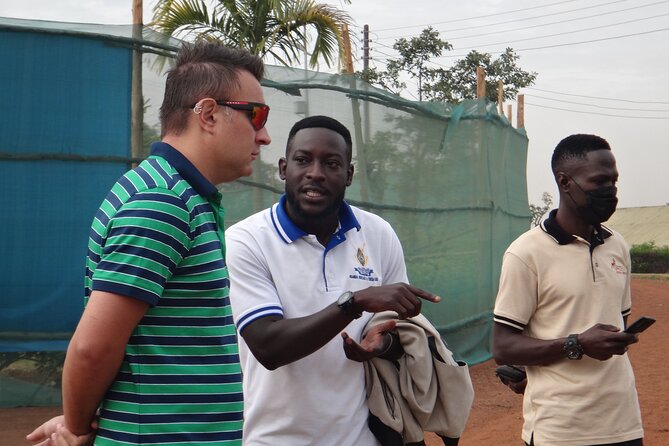
After Kasubi, the vehicle passes through Makerere University, Uganda’s oldest and largest university. Founded in 1922, it is also described as Africa’s third-oldest university.
This is a sightseeing stop rather than a ticketed campus tour. You see the old university library, established in 1949, the main administration building from 1941, and the Education Monument. The scheduled time is about 30 minutes.
Makerere gives you a glimpse of Uganda’s intellectual and academic life. It also helps balance the royal and religious sites with a modern institution that has played a major role in education across East Africa.
Do not expect to wander freely through every building. The value is in the drive and the guide’s explanation of the university’s place in Uganda. If you enjoy architecture, education, or African political history, this short stop may interest you more than its length suggests.
Finding quiet at the Baha’i Temple
The route continues through Kalerwe Market toward Kikaya Hill and the Baha’i Temple. Kalerwe is described as Kampala’s second-largest local market, and you may have time to stop for photographs or buy fresh fruit.
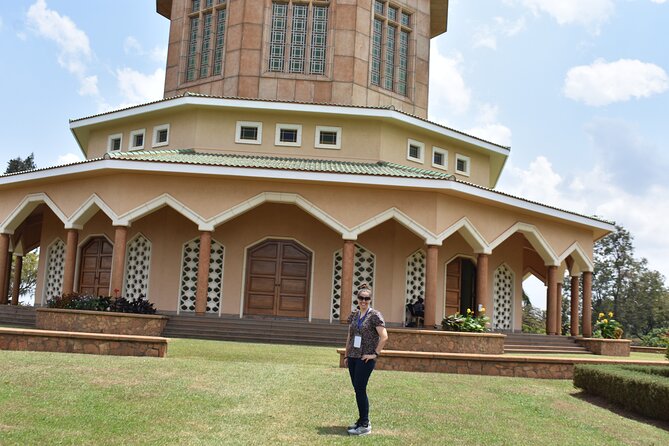
The Baha’i Temple is the only Baha’i temple in Africa. Its setting on Kikaya Hill offers a change of pace after the traffic and dense city streets. You can enter the temple for a period of quiet reflection and walk through the surrounding gardens.
The stop lasts about an hour, and there is no admission fee. I like this part of the route because it is less crowded in spirit than the central market and monument visits. You are not being asked to rush from one object to another. The temple offers a pause and a chance to think about Uganda’s religious diversity.
The temple is closed on Mondays. This is one of the most important details to check before you reserve the tour, since the rest of the route may still operate but this stop will not be available in the normal way.
The Uganda Museum renovation and the changing final stop
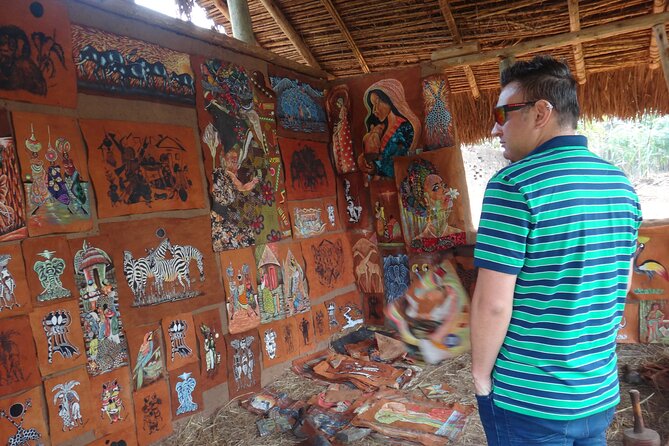
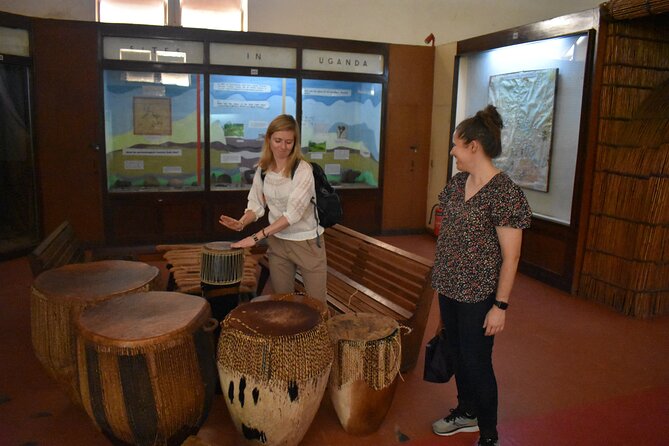
The Uganda Museum is intended to be the final major stop. Founded in 1908 under the British government and moved to its current site in 1954, it is described as East Africa’s first and oldest museum.
When open, the museum should provide a useful final overview of Uganda’s cultures and regions. After seeing individual parts of Kampala, you can use the displays to connect the city with the wider country. It is a sensible ending for a first city tour.
The important catch is that the museum is under renovation and is expected to reopen in late 2025. The timing of your visit matters. Confirm directly before booking if the museum is open, especially if it is one of your main reasons for taking the tour.
When the museum is closed, the tour temporarily ends at the Baha’i Temple before the vehicle returns you to your hotel. That changes the shape of the day, but it does not remove the palace, mosque, tombs, market, university, and central city visits.
What the $215 price really buys you
The listed price is $215 per person. That is not a budget city tour, especially for a solo participant. The price is easier to justify if you are traveling with several people and can use the available group discount.
The value comes from the private vehicle, hotel transfers, driver-guide, fuel, admission fees, bottled water, Wi-Fi-equipped air conditioning, and a designated window seat. You also receive a route map and souvenir photos at no extra charge.
A private tour can be worth paying for in Kampala because the route covers distant parts of the city. Organizing every stop independently would require separate transport, timing, entrance payments, and research into the significance of each site. Here, the guide handles the movement while you focus on the city.
The price makes the most sense for a first visit, a short stay, or a small private group that wants a structured day. It is less compelling if you prefer slow, independent exploration or plan to spend most of your time at only one site.
Lunch is not included, and personal expenses are extra. Drop-off outside the Kampala area is also excluded, so confirm that your hotel falls within the transfer radius.
Timing, comfort, and fitness
The advertised duration is about six to seven hours, even though the experience is titled a half-day tour. The overview also describes it as a full-day private tour. Treat it as a long outing rather than a quick morning circuit.
The 8:30 a.m. start gives you a full day’s beginning, but traffic can affect how long you remain at each stop. The air-conditioned four-wheel-drive minibus should make the driving more comfortable, and the window seat is helpful for seeing the city during the longer transfers.
You need a moderate level of physical fitness. The minaret climb is the clearest physical challenge, but you will also walk at the palace, tombs, mosque, and temple. Wear comfortable shoes, carry a little patience for traffic, and bring modest clothing suitable for religious and cultural sites.
Hotel pickup is offered, and confirmation is provided when you book. Free cancellation is available if you cancel at least 24 hours before the local start time. Changes or cancellations made later are not refunded.
Who should book this experience
I would choose this tour if you are new to Kampala and want a strong overview in one organized outing. It suits solo visitors particularly well because you get a guide, vehicle, and planned route without needing to negotiate transport on your own.
It is also a good fit for couples, families, and small groups interested in history, religion, architecture, and daily city life. The guide’s role matters here. Matthew is praised for being entertaining, patient, and clear, and that kind of personal explanation can turn a long list of stops into a coherent picture of Uganda.
You may want a different plan if your priority is shopping, nightlife, food, or long unhurried visits. The schedule covers many places, so each stop has a set limit. You should also reconsider or adjust the booking if your visit falls on Monday and the Baha’i Temple is essential, or if the Uganda Museum is a must-see while it remains closed.
Should you book the Kampala City Tour?
Book it if you want a private, wide-ranging introduction to Kampala and value an enthusiastic guide more than a slow pace. The route brings together the city center, Nakasero Market, Buganda’s royal sites, the mosque viewpoint, Kasubi Tombs, Makerere University, and the Baha’i Temple.
Before paying, confirm three things: the museum’s reopening status, Monday access to the Baha’i Temple, and whether your hotel qualifies for pickup and drop-off. If you are sharing the tour with others, ask about the group discount, since that can improve the value considerably.
The strongest reason to choose this outing is its context. Kampala’s sights make more sense when someone explains the connection between national government, Buganda royalty, faith communities, education, and ordinary market life. For a first look at Uganda’s capital, that is a useful education, even if the day feels packed.
FAQ
How long does the Kampala City Tour last?
The tour lasts approximately six to seven hours. Although it is titled a half-day tour, the published timing and route make it closer to a long half-day or full-day outing.
What time does the tour start?
The scheduled start time is 8:30 a.m.
Is hotel pickup included?
Yes. Hotel transfers within the Kampala area are included. Drop-off outside the Kampala radius is not included.
Is the Uganda Museum open during the tour?
The Uganda Museum is under renovation and is expected to open in late 2025. Confirm its current status before booking, since the tour may temporarily end at the Baha’i Temple instead.
Is the Baha’i Temple open every day?
No. The Baha’i Temple is closed on Mondays.
Are entrance fees included?
Yes. Admission fees for the planned stopovers are included. Optional activities and personal expenses are not included.
Can I cancel the tour for a refund?
Yes. You can cancel at least 24 hours before the local start time for a full refund. Cancellations or changes made less than 24 hours before the start are not accepted for a refund.
Just added in Kampala
- Uganda Equator Tour From Kampala To Kayabwe★ 5.0 · 4 reviews
- Uganda: 3-Day Gorilla Experience from Entebbe★ 5.0 · 2 reviews
- Uganda: 1-Day Murchison Falls Park Safari with Boat cruise★ 5.0 · 3 reviews
- Entebbe kampala airport transfers★ 5.0 · 3 reviews
- 3-Day Mind Refreshing in Murchison Falls National Park★ 5.0 · 4 reviews
- 3 Days Uganda Gorilla trek Safari Tour★ 5.0 · 4 reviews
- Weekend Package B★ 5.0 · 7 reviews
- Uganda 4 days Gorilla Trekking★ 5.0 · 3 reviews